The word VERY is an adverb and an intensifier – it comes before an adverb or adjective to make it more intense (to a higher degree).
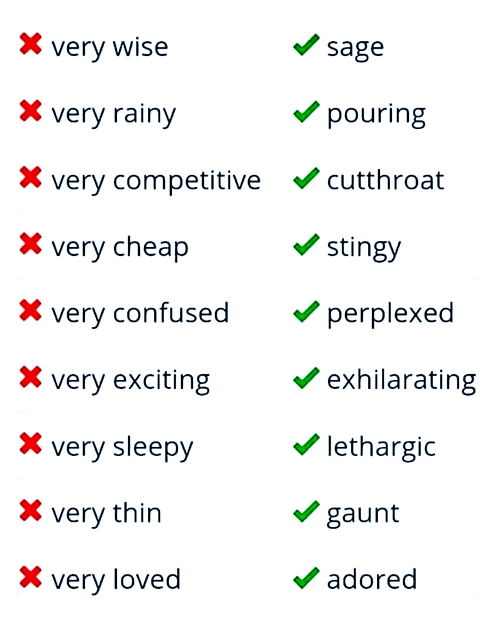
Say sage instead of very wise.
Say pouring instead of very rainy.
Say cutthroat instead of very competetive.
Say stingy instead of very cheap.
Say perplexed instead of very confused.
Say exhiliarating instead of very exciting.
Say lethargic instead of very sleepy.
Say gaunt instead of very thin.
Say adored instead of very loved.
If you have any questions or doubts, please ask in the comments or send me a private message.
Follow me on Instagram: @englishyourwaybr #LearnEnglishWithCarlo
Permanent link to this article: https://englishyourway.com.br/vocabulary-instead-of-very-6/
The word VERY is an adverb and an intensifier – it comes before an adverb or adjective to make it more intense (to a higher degree).
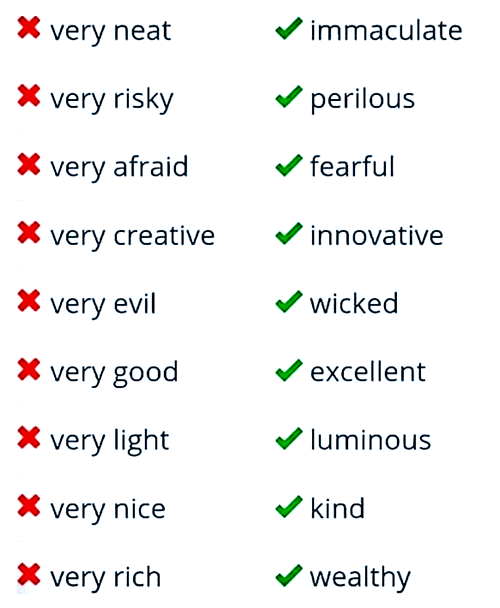
Say immaculate instead of very neat.
Say perilous instead of very risky.
Say fearful instead of very afraid.
Say innovative instead of very creative.
Say wicked instead of very evil.
Say excellent instead of very good.
Say luminous instead of very light.
Say kind instead of very nice.
Say wealthy instead of very rich.
If you have any questions or doubts, please ask in the comments or send me a private message.
Follow me on Instagram: @englishyourwaybr #LearnEnglishWithCarlo
Permanent link to this article: https://englishyourway.com.br/vocabulary-instead-of-very-5/
The word VERY is an adverb and an intensifier – it comes before an adverb or adjective to make it more intense (to a higher degree).
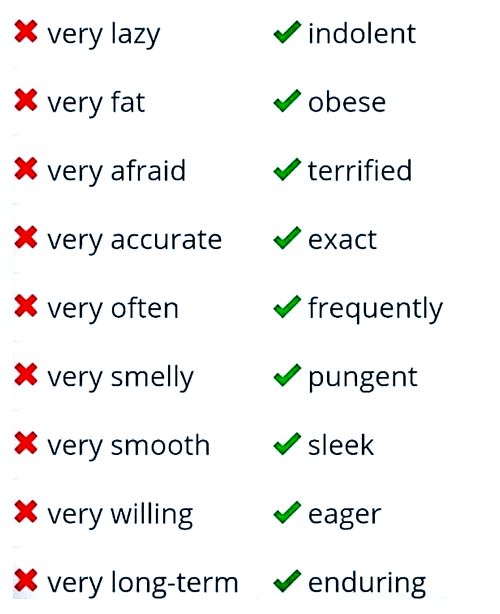
Say indolent instead of very lazy.
Say obese instead of very fat.
Say terrified instead of very afraid.
Say exact instead of very accurate.
Say frequently instead of very often.
Say pungent instead of very smelly.
Say sleek instead of very smooth.
Say eager instead of very willing.
Say enduring instead of very long-term.
If you have any questions or doubts, please ask in the comments or send me a private message.
Follow me on Instagram: @englishyourwaybr #LearnEnglishWithCarlo
Permanent link to this article: https://englishyourway.com.br/vocabulary-instead-of-very-4/
The word VERY is an adverb and an intensifier – it comes before an adverb or adjective to make it more intense (to a higher degree).
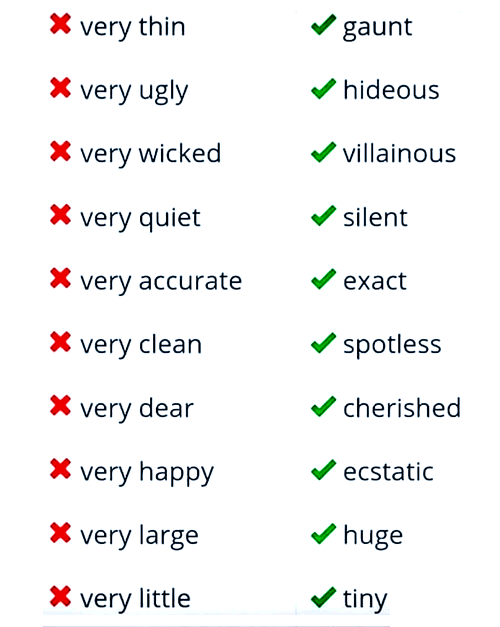
Say gaunt instead of very thin.
Say hideous instead of very ugly.
Say villainous instead of very wicked.
Say silent instead of very quiet.
Say exact instead of very accurate.
Say spotless instead of very clean.
Say cherished instead of very dear.
Say ecstatic instead of very happy.
Say huge instead of very large.
Say tiny instead of very little.
If you have any questions or doubts, please ask in the comments or send me a private message.
Follow me on Instagram: @englishyourwaybr #LearnEnglishWithCarlo
Permanent link to this article: https://englishyourway.com.br/vocabulary-instead-of-very-3/
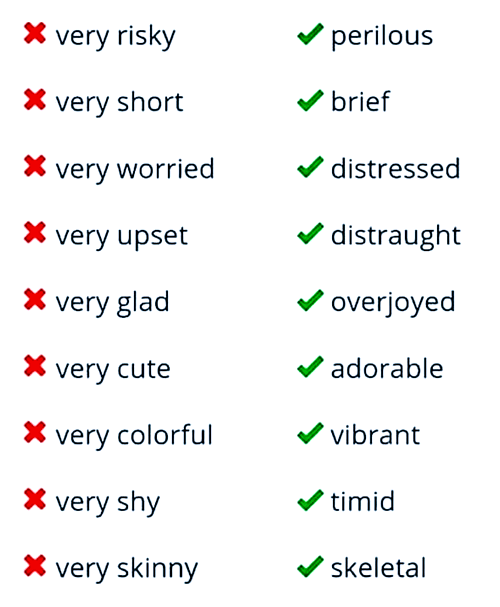
The word VERY is an adverb and an intensifier – it comes before an adverb or adjective to make it more intense (to a higher degree).
Say perelous instead of very risky.
Say brief instead of very short.
Say distressed instead of very worried.
Say distraught instead of very upset.
Say overjoyed instead of very glad.
Say adorable instead of very cute.
Say vibrant instead of very colorful.
Say timid instead of very shy.
Say skeletal instead of very skinny.
If you have any questions or doubts, please ask in the comments or send me a private message.
Follow me on Instagram: @englishyourwaybr #LearnEnglishWithCarlo
Permanent link to this article: https://englishyourway.com.br/vocabulary-instead-of-very-2/
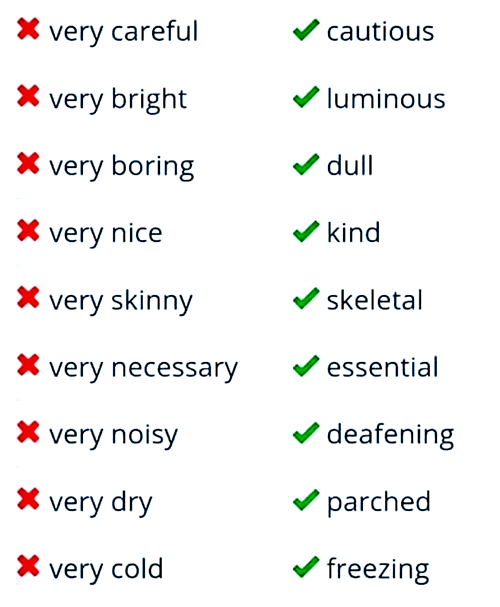
The word VERY is an adverb and an intensifier – it comes before an adverb or adjective to make it more intense (to a higher degree).
Say cautious instead of very careful.
Say luminous instead of very bright.
Say dull instead of very boring.
Say kind instead of very nice. (describing a person)
Say skeletal instead of very skinny.
Say essential instead of very necessary.
Say deafening instead of very noisy.
Say parched instead of very dry.
Say freezing instead of very cold.
If you have any questions or doubts, please ask in the comments or send me a private message.
Follow me on Instagram: @englishyourwaybr #LearnEnglishWithCarlo
Permanent link to this article: https://englishyourway.com.br/vocabulary-instead-of-very-1/
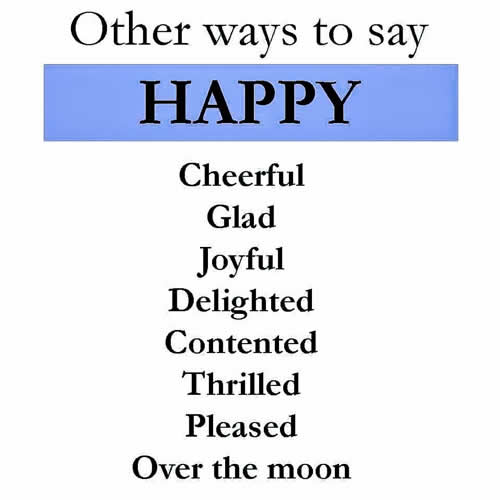
Can you think of any more?
If you have any questions or doubts, please ask in the comments or send me a private message.
Follow me on Instagram: @englishyourwaybr #LearnEnglishWithCarlo
Permanent link to this article: https://englishyourway.com.br/other-ways-to-say-happy/
Can you think of any more?
If you have any questions or doubts, please ask in the comments or send me a private message.
Follow me on Instagram: @englishyourwaybr #LearnEnglishWithCarlo
Permanent link to this article: https://englishyourway.com.br/other-ways-to-say-tired/
Can you think of any more?
If you have any questions or doubts, please ask in the comments or send me a private message.
Follow me on Instagram: @englishyourwaybr #LearnEnglishWithCarlo
Permanent link to this article: https://englishyourway.com.br/other-ways-to-say-beautiful/
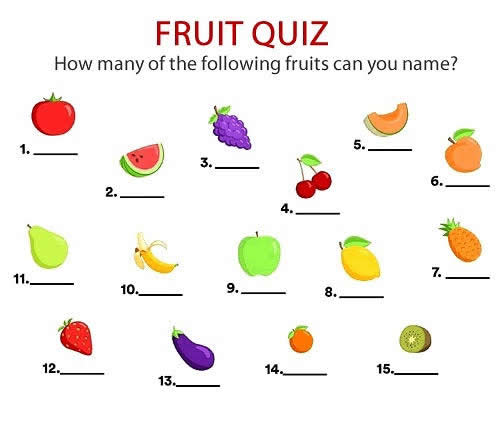
How well do you know your fruit?
Can you name all the different fruits in this image?
Tomato (Yes, it’s a fruit!)
Watermelon
Grapes
Cherry
Melon (Canteloupe)
Peach
Pineapple
Lemon
Apple
Banana
Pear
Strawberry
Eggplant (Yes, it really is a fruit!)
Orange
Kiwi
If you have any questions or doubts, please ask in the comments or send me a private message.
Follow me on Instagram: @englishyourwaybr #LearnEnglishWithCarlo
Permanent link to this article: https://englishyourway.com.br/vocabulary-fruit-2/
Load more